The Connectology® Podcast by Roadnight Taylor
Roadnight Taylor’s influential team of elite grid connections specialists (Connectologists®) and their expert guests help you to better understand distribution and transmission network connections, and how to acquire them faster, at less cost and at lower risk.





Episodes
4 days ago
4 days ago
22 min
Data centre developers face steep new costs and tight new deadlines under Ofgem's proposed Demand Connections Reform - from six-figure commitment fees to milestones that land before financial certainty is realistic. In the latest Grid News and Views episode of the Connectology® podcast, Connectologists® Pete Aston, Rachael Eynon and Nikki Pillinger dive into what the consultation could mean, alongside lingering Gate 2 issues, the SSEP timeline and why compliance planning needs to start early.
Commitment fees: Ofgem's proposed data centre commitment fee runs from £237,500.00 to £712,500.00 per megawatt, due in full on offer acceptance. The team's concern is that a fee this steep risks pushing out more than the intended speculative projects.
New M0.5 milestone: a non-binding offtaker commitment is needed within six months, tough when some connection dates run to 2036.
Gate 2 still shifting: some early protected' projects remain without offers, and other phase one dates are slipping into phase two due to Transmission Owner (TO) contractor resourcing and newly identified network reinforcement requirements.
Compliance takes time: transmission-connected projects need at least two years' lead time, with specialist testing resource being scarce and costly.
Recorded: 09 September 2026
This content was recorded on an earlier date. The connections landscape changes rapidly, so please treat any facts, figures, and guidance as a point-in-time view and verify current information before relying on it.
Our links: Website: https://roadnighttaylor.co.uk/ Newsletter sign up: https://roadnighttaylor.co.uk/newsletter/ Follow us on LinkedIn: https://www.linkedin.com/company/roadnight-taylor-ltd/ Find if we fit at info@roadnighttaylor.co.uk
Sep 17, 2026
Sep 17, 2026
37 min
In this latest Connectology® episode, Kyle Murchie and Rachael Eynon catch up on where Gate 2 offers stand and the industry conversations shaping what comes next.
a proposed defects list on the connections portal could let developers sign offers with a clear view of what's still outstanding, instead of queries disappearing into a black hole
65-plus complex projects are running into unexpected challenges following study, raising real questions about how phase two will play out and what we can do now
developers with stages beyond 2027 and at least one in Phase 2 will now get a letter instead of a formal offer for 2028 – 2030 stages, giving them visibility without pressure to sign before they've seen the full picture (which should come as part of the Phase 2 Offer)
a relatively new National Grid Electricity Distribution (NGED) dashboard is giving developers earlier sight of timelines
the first designation application has gone to consultation, opening up a new route for strategic projects
Jul 14, 2026
Jul 14, 2026
26 min
Connectologists® Catherine, Philip and Alex ask whether standardising substation design means we're now building too much grid.
Key themes discussed include:
the cost of going big: a substation built to serve multiple future customers can cost £100m–£150m and use up to 100 acres of land - several times the £20m–£30m it costs to build a smaller substation for a single customer
a live example: one project was moved to a new, larger substation meant to serve several customers - but most of those other customers dropped out after Connections Reform, leaving a big substation to be built for demand that no longer exists
a question of intent: is building big and scaling back later a deliberate strategy, or just a lack of one
the planning horizon: there's no Strategic Spatial Energy Plan yet to guide where new substations should go, and around fourteen years of demand is already queued up - so how far ahead should operators be planning
a risk to innovation: always reaching for a big new substation could mean that smarter options, like sharing existing bays, get overlooked
Recorded: 09 June 2026
This content was recorded on an earlier date. The connections landscape changes rapidly, so please treat any facts, figures, and guidance as a point-in-time view and verify current information before relying on it.
Our links: Website: https://roadnighttaylor.co.uk/ Newsletter sign up: https://roadnighttaylor.co.uk/newsletter/ Follow us on LinkedIn: https://www.linkedin.com/company/roadnight-taylor-ltd/ Find if we fit at info@roadnighttaylor.co.uk
Jul 7, 2026
Jul 7, 2026
25 min
Pete Aston is joined by Nikki Pillinger and Alex Ikonic for a fast-moving look at Demand Reform and several Code Modifications in progress.
HV asset ownership: strong industry support for new ownership routes - either a class exemption or an Independent Transmission Owner (ITO) license. NGET is now consulting demand customers on whether they'd want to own High Voltage (HV) assets, potentially as part of some Gate 2 Phase 2 offers, with a fuller Ofgem consultation expected in autumn
CURATE pillar: Ofgem is weighing financial mechanisms and new milestones to keep only viable projects in the demand queue, with a consultation due within about a month
CMP417: would bring demand cancellation securities in line with generation; final report due to Ofgem imminently, decision expected by end of summer
CMP470: a new project commitment fee for oversubscribed technologies, rising to £25k per megawatt at maximum; consultation closed 30 June
CMP460/DCP461: deciding how Super Grid Transformer costs are charged — a second industry vote produced no clear consensus, so the decision now sits with Ofgem
Recorded: 25 June 2026
This content was recorded on an earlier date. The connections landscape changes rapidly, so please treat any facts, figures, and guidance as a point-in-time view and verify current information before relying on it.
Our links: Website: https://roadnighttaylor.co.uk/ Newsletter sign up: https://roadnighttaylor.co.uk/newsletter/ Follow us on LinkedIn: https://www.linkedin.com/company/roadnight-taylor-ltd/ Find if we fit at info@roadnighttaylor.co.uk
Jul 1, 2026
Jul 1, 2026
27 min
Developers and investors have spent the past year navigating Gate 2 applications, hoping for offers that would clearly de-risk their projects. In this episode, Connectologist® Pete Aston is joined by Connectologists® Nikki Pillinger and Rachael Eynon to unpack what is actually showing up in those offers and the queue changes ahead.
Offer progress: transmission and distribution protected offers have now been issued, with around 400 accepted and only seven declined so far
Unhelpful clauses: some protected offers include caveats suggesting transmission costs or assessments could still change, which Nikki Pillinger flags as inconsistent with the methodology for protected projects
Cost increases: several DNOs are showing significant cost rises beyond the expected 30 to 40%, with some linked to new delivery frameworks
Industry workshop outcomes: requests for earlier sight of transmission works, more flexible acceptance windows for staged connections, and better prioritisation of post-offer queries
New working groups: CIDEF (Connections Investor/Developer Engagement Forum), led by Ofgem, and a separate DNO consistency group from RenewableUK
Methodology updates: queue protections will remain for all projects, not just batteries, alongside new prioritisation for hybrid and repowering projects
Mod App scoping: NESO is gathering early views on project changes ahead of the next Gate 2 window, with a tight 10 July deadline
Recorded: 25 June 2026
This content was recorded on an earlier date. The connections landscape changes rapidly, so please treat any facts, figures, and guidance as a point-in-time view and verify current information before relying on it.
Our links: Website: https://roadnighttaylor.co.uk/ Newsletter sign up: https://roadnighttaylor.co.uk/newsletter/ Follow us on LinkedIn: https://www.linkedin.com/company/roadnight-taylor-ltd/ Find if we fit at info@roadnighttaylor.co.uk
May 18, 2026
May 18, 2026
37 min
Connectologists® Pete Aston, Philip Bale, and Alex Ikonic return for another GNV session, covering the developments shaping the connections landscape right now.
The episode explores:
Gate 2 offer progress is moving steadily, with 100% of protected transmission offers issued and distribution at 39%, though Phase 1 offers (to 2030) arriving mid-May to September are expected to bring more complex terms and cost increases.
Technical queries are critical as some offers have contained material errors, developers are urged to raise queries within the four-week window before accepting.
Demand connections reform is gaining momentum, with an estimated 50+ gigawatts of data centre capacity in the queue and consultations underway on viability measures, alongside demand registers expected later this year.
ANM curtailment risk is proving greater than forecast for many connected projects, with unclear LIFO positions, data errors, and Gate 2 queue restructuring all adding uncertainty.
Transmission delays are already reaching customers, with no equivalent financial consequence for transmission owners - an asymmetry the Connectologists® flag as requiring urgent attention.
Recorded: 12 May 2026
This content was recorded on an earlier date. The connections landscape changes rapidly, so please treat any facts, figures, and guidance as a point-in-time view and verify current information before relying on it.
Our links:
Website: https://roadnighttaylor.co.uk/
Newsletter sign up: https://roadnighttaylor.co.uk/newsletter/
Follow us on LinkedIn: https://www.linkedin.com/company/roadnight-taylor-ltd/
Find if we fit at info@roadnighttaylor.co.uk
Apr 20, 2026
Apr 20, 2026
43 min
Rachael Eynon is joined by Adam Sroka, CEO of Hypercube, a specialist data and AI consultancy focused on the energy sector, to explore how energy organisations can navigate AI adoption safely and practically.
Adam explores:
How the energy sector is roughly a decade behind leading tech industries in AI adoption — caution that exists for good reason given the complexity of multi-stakeholder energy systems
His "risk staircase" approach favours the lowest-risk use case that proves value and builds confidence before scaling up
AI as a quality check: using one model to critique or score the output of another is a practical pattern that could help organisations improve the reliability of AI-generated work without heavy overhead
AI's role in Connections Reform: as grid connection processes grow more complex, there may be opportunities for AI to improve data accessibility, transparency, and decision-making across the connections landscape
Connectologist® Catherine Cleary also joined Adam on the Hypercube Energy Podcast, exploring grid connection reform, queue management, and the future of connections from an engineer's perspective — you can listen to that conversation here: https://wearehypercube.com/grid-reform-queue-management-and-the-future-of-connections/
Recorded: 30 March 2026
This content was recorded on an earlier date. The connections landscape changes rapidly, so please treat any facts, figures, and guidance as a point-in-time view and verify current information before relying on it.
Our links:
Website: https://roadnighttaylor.co.uk/
Newsletter sign up: https://roadnighttaylor.co.uk/newsletter/
Follow us on LinkedIn: https://www.linkedin.com/company/roadnight-taylor-ltd/
Find if we fit at info@roadnighttaylor.co.uk
Apr 13, 2026
Apr 13, 2026
20 min
Kyle Murchie, Nikki Pillinger, and Rachael Eynon return for Part 2 of GNV18, covering Ofgem's end-to-end review progress and the rapidly evolving demand connections landscape.
Ofgem's end-to-end review: working groups are already delivering, with DNOs and NESO committed to publishing registers of accepted demand connections from one megawatt and above
Guaranteed connection dates: Nikki notes DNOs are open to the concept but timing must link to meaningful developer milestones — financial investment decision, contractor appointment, or construction planning — not offer stage
Data transparency: SSEN and UKPN have improved demand data tools, now separating BESS and non-BESS demand at substation level
Demand queue growth: the combined transmission and distribution queue grew from approximately 42 gigawatts to around 125 gigawatts between summer 2024 and summer 2025, driven by AI data centres, hydrogen, and industrial decarbonisation
Information Request Notice: a mandatory NESO request targeting Gate 1 and Gate 2 demand customers requiring detailed project progress and financial information — closed on the 13 April 2026, with concerns raised about response quality given tight timescales
DESNZ strategic demand consultation: running in parallel with responses due 15 April 2026, exploring enhanced queue readiness requirements, a strategic demand project designation process, and potential regional targets for data centre placement
Recorded: 07 April 2026
This content was recorded on an earlier date. The connections landscape changes rapidly, so please treat any facts, figures, and guidance as a point-in-time view and verify current information before relying on it.
Our links:
Website: https://roadnighttaylor.co.uk/
Newsletter sign up: https://roadnighttaylor.co.uk/newsletter/
Follow us on LinkedIn: https://www.linkedin.com/company/roadnight-taylor-ltd/
Find if we fit at info@roadnighttaylor.co.uk
Apr 13, 2026
Apr 13, 2026
31 min
In Part 1 of Grid News and Views 18, Connectologists® Kyle Murchie, Nikki Pillinger, and Rachael Eynon cover the latest Gate 2 offer progress, the methodology consultation's most pressing areas, and emerging repowering challenges.
Gate 2 transmission offers: Progress on protected offers had reached 80% issued as of late last week, though whether that figure covers transmission and distribution remains unclear. Protected 2026/27 distribution offers are still expected before end of May
Offer quality: Some offers are missing key appendices and Gate 1 offers have contained inaccurate statements — worth checking before signing. SSEN Transmission has proposed a pre-offer information call to help developers sense-check their offer ahead of receipt
Methodology consultation: Deadline extended to the 21st. Key question: whether protections clauses 3A and 3B should be disapplied for batteries due to oversupply — though Nikki cautions this is premature given unknown acceptance rates and market forces
Capacity reallocation: Capacity freed by departing projects goes to existing queue participants in the first instance, not new applicants
Repowering: Clear policy needed for older distribution-connected sites. Questions remain around impact to queue position, and what would be deemed a technology change. Regen's recent paper on repowering wind is worth a read
Since recording, the NESO has published updated figures confirming 88% of Gate 2 protected offers have now been issued, with fewer than ten TOCOs outstanding per Transmission Owner. NESO has also issued more than 1,000 Gate 1 offers. Transmission offers remain on track for mid-April and distribution offers for mid-May. A cross-industry dashboard led by the ENA will shortly provide a consistent view of progress across transmission and distribution.
Recorded: 07 April 2026
This content was recorded on an earlier date. The connections landscape changes rapidly, so please treat any facts, figures, and guidance as a point-in-time view and verify current information before relying on it.
Our links:
Website: https://roadnighttaylor.co.uk/
Newsletter sign up: https://roadnighttaylor.co.uk/newsletter/
Follow us on LinkedIn: https://www.linkedin.com/company/roadnight-taylor-ltd/
Find if we fit at info@roadnighttaylor.co.uk
Apr 2, 2026
Apr 2, 2026
46 min
Pete Aston is joined by John Twomey, Director of Customer and Network Development at National Grid Electricity Transmission, to explore where Connection Reform stands and what developers can expect as the engineering phase gets underway.
Connection Reform has entered execution mode - system studies are now underway, with transparency, customer-centricity, and contract quality as the three priorities shaping Gate 2 offers
Connection dates will be ambitious but deliverable - assessments draw on project critical paths, system access windows, and direct customer input on risk appetite, with deferral conversations already happening where needed
Battery oversubscription is a significant challenge — NGET needs around 10GW of battery connections by 2035, yet over 40GW of batteries will receive a Gate 2 offer, with pressure falling on substation bays rather than wider network reinforcement
Bay sharing is emerging as a key solution — two or more customers sharing a single substation bay is being actively assessed across both legacy and new-build substations before offers go out to customers
Attrition will open optimisation opportunities — as offers go unaccepted, options emerge for projects further back in the queue, with customers engaged individually before any contract changes are made
NGET is scaling significantly — a new five-year price control with Ofgem covers around £35billion of investment, backed by a new regional supply chain framework designed to accelerate delivery
Recorded: 26 March 2026
This content was recorded on an earlier date. The connections landscape changes rapidly, so please treat any facts, figures, and guidance as a point-in-time view and verify current information before relying on it.
Our links: Website: https://roadnighttaylor.co.uk/
Newsletter sign up: https://roadnighttaylor.co.uk/newsletter/
Follow us on LinkedIn: https://www.linkedin.com/company/roadnight-taylor-ltd/
Find if we fit at info@roadnighttaylor.co.uk
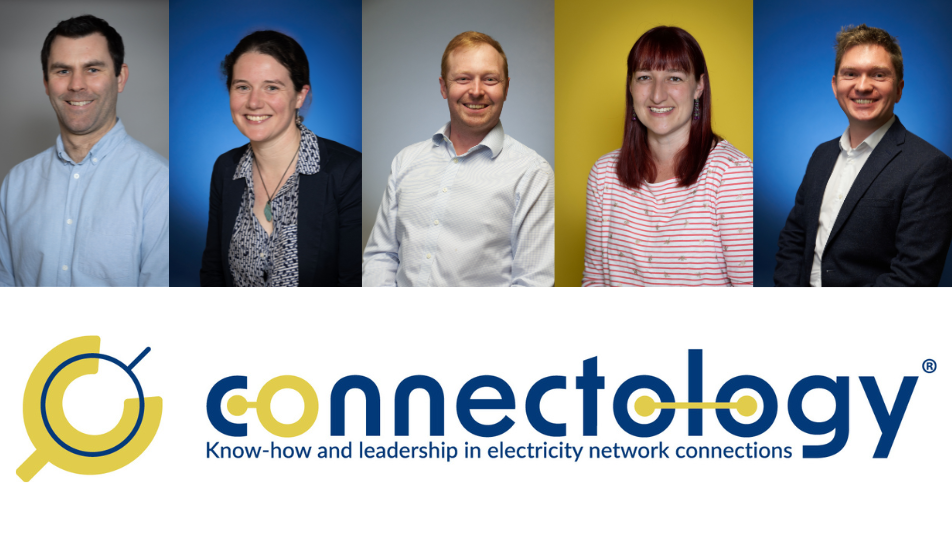
Who are Roadnight Taylor?
The Roadnight Taylor team has a connection success rate some five times greater than the market as a whole — on large-scale demand-led projects (housing, commercial and industrial) and energy schemes from solar, wind, battery storage, nuclear, hydrogen and EV charging and from 11,000 to 400,000 volts.
Their Connectologists® are respected and revered within the connections community for their niche expertise, insight, influence, and thought-leadership – and for the edge they give their clients relative to their clients' peers — through acquiring viable distribution and transmission network connections faster, at lower risk, and for less cost.